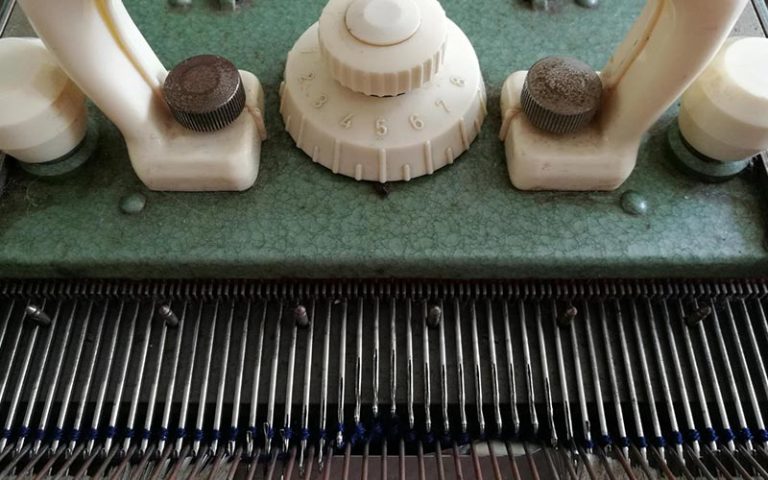
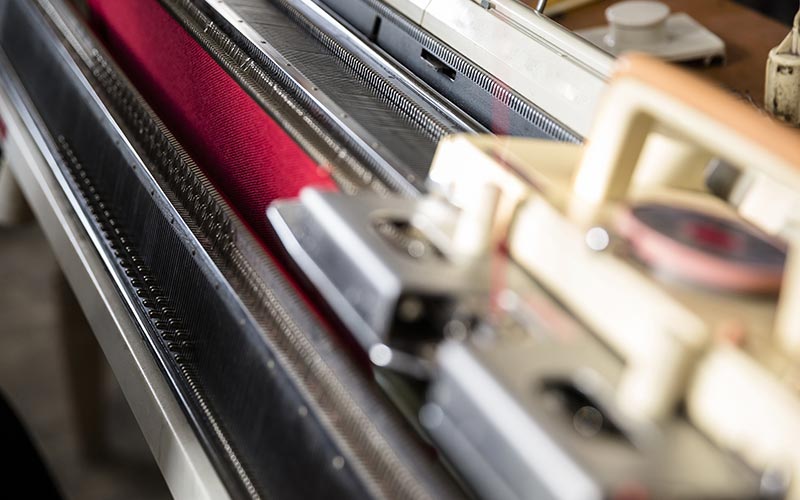
It’s early Saturday morning in Lagos. A young woman, Ada, steps into her small balcony craft‑corner, a domestic knitting machine in front of her. She remembers the nights spent hand‑knitting scarves for her friends, slow loop after loop, but today she’s determined to try something new: machine knitting. She takes a deep breath. She doesn’t have a degree in textile engineering. She just has curiosity and a willingness to learn. That, in fact, is more than enough.
If you’re reading this, you are like Ada. You’re ready to explore “machine knitting beginner projects”, you’re wondering “how to start machine knitting”, and you’re keen on making “easy machine knit items” without needing a degree. In this article, we’ll walk you through machine knitting – from what it is, why it’s fun (and growing), to a summary of how to start and some beginner‑friendly project ideas. We won’t dive into super‑advanced tutorials. This is about getting started confidently.
What Is Machine Knitting? A Friendly Introduction
Typically when people think of knitting, they imagine two needles and yarn in hand. Machine knitting shifts that paradigm. Instead of manipulating each loop by hand, a machine lays down rows of loops automatically. As one author puts it: “Machine knitting proceeds more quickly than in hand knitting… one row of loops in a single movement.” estherkateblog+1
In simpler terms: you feed yarn, the machine loops, and you get fabric much faster than by hand.
Domestic knitting machines have existed for decades (since the 1950s in domestic form) and many are designed for beginners. Knitting & Crochet Guild+1
For a beginner, this means: you can produce a knitted piece in a fraction of the time it would take by hand, with less repetitive wrist‑action. It’s productive, satisfying.
Of course, there is a learning curve. One key difference: many machine knitters note that you’re often looking at the “purl side” of the work more than you’re used to if you hand‑knit. Knit It Now
But the good news: for absolute beginners who just want to create “easy machine knit items”, the path is accessible.
Why Machine Knitting Is a Great Choice for Beginners
Productivity & Satisfaction
When you’re starting out, making something you can wear or gift quickly matters. Machine knitting accelerates fabric production. That means more visible results, more motivation.
Lower Physical Stress
If you’ve tried hand‑knitting large items, your wrists or shoulders may complain. Machine knitting can ease tension because much of the work is done by the machine.
Market Growth & Opportunity
Here are some interesting stats:
- The global knitting machines market was valued at roughly USD 4.9 billion in 2023 and is estimated to grow at a CAGR of 5.4% through 2032. Global Market Insights Inc.
- Another source estimates the global knitting machine market will grow from about USD 5.18 billion in 2024 to USD 10.54 billion by 2034 (CAGR ~7.37%). Precedence Research
- In one study, the Asia‑Pacific region (which includes Nigeria’s broader textile influence) accounted for ~40% of the market share. Persistence Market Research
What that means for a beginner: you’re entering a craft that’s not dying or shrinking. There’s renewed interest in knitted products, custom items, home‑textiles and small‑business opportunities.
Creativity & Personalisation
Machine knitting opens doors for custom fabrics, textured pieces, faster production of simple items, which means as a beginner you can make something personal and unique almost immediately.
How to Start Machine Knitting
Here’s a summary of the steps you can take to get started – no PhD required.
Choose Your Machine
Before you dive into “machine knitting beginner projects”, you’ll need a machine. Good news: you don’t need the most expensive industrial model. Many domestic models will do. One guide suggests asking: “What do you want to machine knit?” as your first question. Machine Knit Community
Here are some quick checks:
- Gauge of the machine: fine, standard, chunky. For beginners, a standard gauge (for DK yarn) is often easiest.
- Bed type: flatbed vs circular. Flatbed machines (where you knit flat pieces) tend to suit beginners better.
- Ease of setup and servicing: Choose a machine with local support if possible.
- Budget & location: In Nigeria (or wherever you are) check local availability of spare parts and service.
Once you have your machine set up and familiarised, you’re ready.
Familiarise Yourself With Basic Operations
- Learn how to cast on the machine.
- Practice knitting a plain fabric (stockinette) so you understand how loops form.
- Understand tension adjustments: machine knitting relies heavily on correct tension settings more than you might expect. One guide says: “The learning curve centers on understanding mechanical tension control versus the intuitive tension adjustments made with hand‑held needles.” KW Knitting
- Practice the rhythm: Yarn feeding → carriage or bed action → fabric building.
- Learn to bind off or finish your piece.
Pick a Simple First Project
Here is where “easy machine knit items” come in. For your first few projects, aim for simple shapes (rectangles, tubes) and minimal shaping. Think: scarves, simple cowls, basic hats, or straight‑cut shawls.
Why? Because you learn the machine’s rhythm, how the yarn behaves, how tension affects outcome. Once you’re comfortable, you can move on to items with shaping or colourwork.
Work Through Challenges (And Don’t Quit)
- You may feel “out of control” at first because the machine works fast. Slow down if needed.
- Your stitches may look uneven early – that’s normal. Adjust tension, yarn feed, bed alignment.
- Your machine may ‘skip’ or drop loops – check the needle bed, check that yarn is smooth.
- “We don’t turn the work back and forth with each row,” notes one machine knitting guide. The machine stays stationary, the work feeds through. That’s a shift. Knit It Now
Stay patient. The aim is progress, not perfection.
Where We (Creyalle) Can Help
At Creyalle, we specialise in teaching beginners how to start machine knitting with clear, supportive guidance. If you’d like support, you can visit our website’s contact page to reach out. We love to help you take that first step with confidence.
Machine Knitting Beginner Projects: What to Try First
Here are 3 project ideas perfect for absolute beginners. They are designed to build confidence, and they all fall under “easy machine knit items”.
1. The Straight Scarf (or Cow‑/Neck Warmer)
Why it works: Mostly rectangular, minimal shaping, you’ll practice casting on, knitting, binding off.
What you’ll need: DK or worsted‑weight yarn, standard gauge machine, basic cast‑on tool, waste yarn.
What you’ll learn:
- Setting up the machine and casting on all needles.
- Knitting plain rows until desired length.
- Binding off and finishing the edges.
Tips for success: Use a yarn you like the feel of (it makes the process more pleasant). Keep your tension just a bit looser than you think – machine‑knit fabric often turns out tighter than expected.
When you finish: you’ll have a wearable item. That feels rewarding.
2. The Simple Hat (Tube)
Why it works: Slight shaping or finishing required, but still basic. You’ll start to learn forming tubes, decreasing.
What you’ll need: Yarn similar to scarf project. A ribber or rib setting if your machine has it (optional).
What you’ll learn:
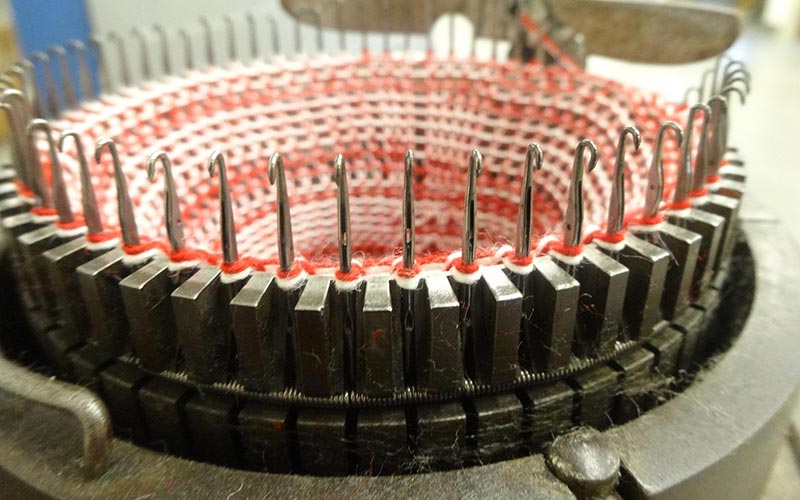
- Knitting in the round or creating a tube by folding.
- Shaping at the top (gathering, reducing stitches) or simply binding off and sewing top.
Tips: Use a bold, solid colour so you can easily see stitches and evaluate tension. Keep shaping minimal for your first hat.
Outcome: A cosy hat that you made yourself. That builds confidence.
3. The Basic Cushion or Pillow Cover
Why it works: You create a fabric rectangle (or two), sew it onto a cushion pad. It trains you to think of pieces as larger garments.
What you’ll need: Yarn you like, machine bed, dimensions for cushion size (e.g., 16″ x 16″).
What you’ll learn:
- Measuring and knitting to dimension.
- Finishing: binding off, seaming two pieces or using one folded piece.
- Thinking about gauge: how many stitches per inch matter even in simple items.
Tips: Pick a forgiving yarn (acrylic blend or cotton) so the result is durable.
Outcome: A decorative item. You’ll feel proud.
Each of these beginner projects helps you master one dimension of machine knitting: fabric production speed, learning machine rhythm, tension control, finishing. From there you can scale to shirts, cardigans, more complicated stitch patterns – but not today. Today you practise easy machine knit items.
Troubleshooting & Tips for Beginners
As you go through “machine knitting beginner projects”, you’ll likely hit a few snags. Here are some common issues and how to deal with them.
Uneven Tension / Puckering
If your fabric looks wavy or puckered, your tension might be too tight, or your yarn feed inconsistent. For beginners: loosen the tension slightly and ensure the yarn flows freely from the ball.
Dropped Loops or Missed Stitches
Check the needle bed: ensure needles move freely, carriage is clean, no broken parts. Watch the first few rows carefully.
Fabric Too Tight / Too Dense
Machine frankly creates fabric faster and often more densely than hand‑knit. If you’re used to hand knitting, you may need to choose a larger needle bed gauge or use thicker yarn to match the hand‑knit feel. Guides highlight that machine knitters must adapt to “mechanical tension control”. KW Knitting+1
Finishing & Seaming
Don’t ignore finishing – many machine‑knit pieces look sloppy if binding off or seams are ignored. Use simple finishing (whip stitch, mattress stitch) for your first projects.
Practice Regularly
The fastest improvement comes from consistent practice. Even 30 minutes a few times a week will make a huge difference. Remember Ada on the balcony with her tea? She spent 20 minutes each morning, and by week three she was confidently finishing her first scarf. Consistency beats marathon sessions.
Why You Don’t Need a Degree (Really)
One of the biggest blocks for beginners is the thought: “Do I need formal training or a certificate?” The answer: no.
Here’s why:
- Domestic machines are designed for non‑industrial use: they are accessible and user‑friendly.
- There are plenty of online tutorials, communities, and peer support (like at Creyalle) that guide you step‑by‑step.
- The core skills (casting on, knitting stockinette, binding off, finishing) are straightforward. Once you master them, you can build onward.
- The craft is more about repetition, attention, and creativity than heavy technical engineering.
- As a beginner you don’t need to design complex garments or use industrial machines – you just need to complete simple “machine knitting beginner projects” to build your confidence and experience.
In short: Your willingness to learn + consistent effort + the right machine + good tutorial support = success. That’s all.
What Comes Next After Your First Projects?
Once you’ve made a scarf, hat and cushion cover, you’re ready for some exciting next steps – still beginner‑friendly, but a bit more creative.
- Try adding a ribbing edge (for hats or cuffs).
- Experiment with colour stripes or simple fair‑isle (if your machine supports it).
- Explore pockets of gauge: knit a swatch in different yarns and record stitches‑per‑inch.
- Make a simple garment: perhaps a tube dress or an oversized sleeveless top. The key is that you’ll repeat what you already know (cast on, knit rectangles) but assemble them differently.
- Join a community: share your progress, ask questions, learn from others. Many machine knitting learners say that interacting with others shaved months off their learning curve.
And of course, if you ever feel stuck or unsure, you can visit our contact page at Creyalle (https://creyalle.com/contact/) to reach out for guidance.
Final Encouragement
Starting anything new – like machine knitting – can feel daunting. You might ask yourself: “Will I mess it up?” “What if I pick the wrong yarn?” “Is this too technical for me?” My answer: Yes, you might make mistakes. That’s fine. That’s how you learn.
Remember Ada on the balcony? She didn’t get it perfect on her first try. She dropped loops; tension was uneven; she pulled out part of her scarf and redid it. But each time she did it, she got more confident. By week four she was finishing an easy machine knit items series and planning her first gift‑project for a friend.
You can do the same. Start simple. Pick your machine, pick your yarn. Try your first project. Learn how to start machine knitting. Make easy machine knit items. Build confidence.
You don’t need a degree. You just need persistence, curiosity, and the right support. Let machine knitting open a new creative avenue for you.
Are you ready to cast on?