Picture yourself walking into your knitting room, freshly brewed tea in hand, with your trusty flatbed knitting machine ready. You’ve cleared the table, laid out your yarns, and you’re excited to start a piece for your next project. But then… a stitch drops. Again. You sigh. “Not now,” you think. Because you know that the line between a smooth knit run and frustration is thin.
Welcome to the world of machine knitting where even the best‑laid plans can unravel. If you’re just getting started with a flatbed knitting machine, you’re in the right place. This article will walk you through the key issues beginner machine‑knitters face when operating a flatbed machine-and how to remedy them with simple, practical advice. We’ll cover why your machine dropped stitches, how to fix things step‑by‑step, and how to keep maintenance issues at bay. Let’s get started.
Industry Snapshot: Why This Machine Matters
Before diving into the nitty‑gritty of troubleshooting, a few global stats to set the scene. The flatbed knitting machine and knitting‑machine sector is part of a dynamic global industry:
- The global flat knitting machines market size was valued around USD 5.3 billion in 2023, and is projected to reach about USD 10.3 billion by 2030, with a compound annual growth rate (CAGR) of approximately 10.2%. Verified Market Research
- The broader global knitting‑machines market is forecast to grow from about US$ 5.52 billion in 2025 to US$ 9.03 billion by 2032, a CAGR of roughly 7.3%. Persistence Market Research
- The Asia‑Pacific region is dominating production share, thanks to large textile manufacturing hubs. Persistence Market Research+1
These numbers underscore why mastering the basics of machine knitting-and especially machine‑knitting troubleshooting-is valuable. Whether you’re hobbyist or entrepreneurial, you want your flatbed knitting machine delivering reliable output for quality items.
At Creyalle we know the value of consistently smooth machine runs, and we’re here to help you deliver quality machine‑knitted items. visit our shop page for your supplies.
Understanding Your Machine: Basics for Beginners
Before we tackle problems, let’s cover the key parts and common terms, so you can speak machine‑knitter language-and know what you’re looking at when things go wrong.
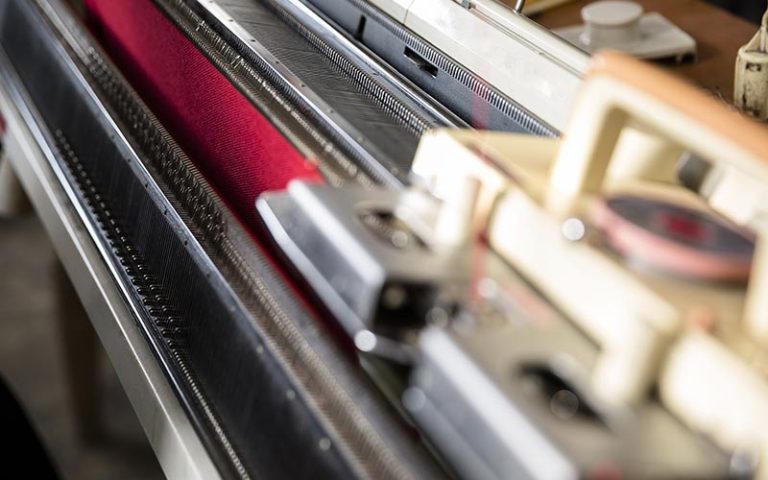
- Flatbed knitting machine: A machine in which the needles are arranged on a flat bed (rather than circular). It’s ideal for pieces like panels, sleeves, or full garments.
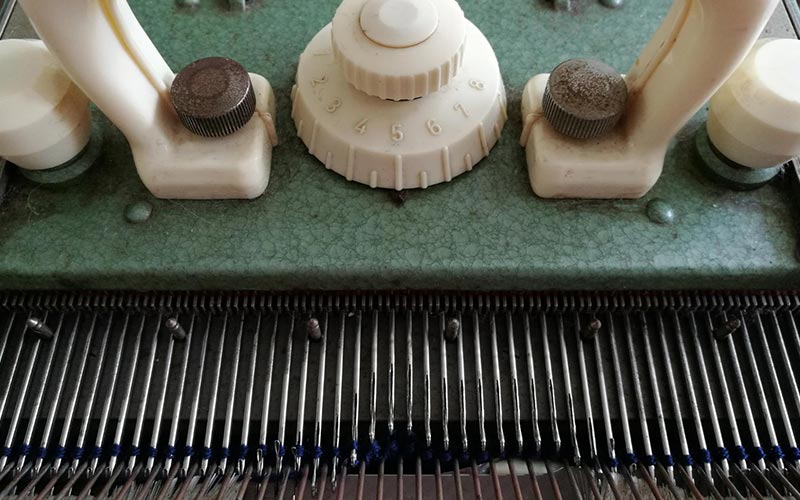
- Needle bed / needles: The row or rows of needles that hold and form loops of yarn.
- Latch‑needle (or hook‑needle): In many flatbed machines the needles have latches that open and close to form loops.
- Carriage: Moves across the needle bed depositing loops and forming stitches.
- Tension unit / feeder: Manages the tension of the yarn as it feeds into the machine.
- Sponge bar / needle retainer bar: Supports needles when they are pushed up for selection or knitting. If it’s worn or compressed it can cause dropped stitches. Knitting Closet+1
Knowing these will help you spot where things might have gone off‑track when your machine misbehaves.
Common Problem #1: Dropped Stitches
Ah yes. The dreaded dropped stitch. If you’ve ever seen a loop missing or a stitch ladder forming down your piece, you’re experiencing one of the most frequent flatbed machine issues: knitting machine dropped stitches fix is your key phrase here.
Why dropped stitches happen
Here are typical causes for a dropping stitch in a flatbed machine setup:
- A bent or broken needle or latch. If the needle is not closing cleanly, the loop can escape. Knitting Closet+1
- A worn sponge bar / needle retainer that has lost height or grip. “Check your needle retainer bar… if foam is not at least 3/8 inch above metal backing” is advice from a troubleshooting guide. Knitting Closet
- Yarn tension too loose (or too tight) causing loops to not form properly. Knitting Closet
- Yarn path issues: yarn hung up, feeder mis‑threaded, or tension spring (antenna) not functioning. Knitting Closet
- Carriage or feeder travel problems: if the carriage is catching or moving unevenly, needles might not form loops properly.
How to fix dropped stitches
Here’s a beginner‑friendly overview to fix this problem:
- Stop knitting when you notice a drop. It’s much easier to fix right away than later.
- Use a latch tool or small hook to pick up the dropped loop onto the needle above it-or back it up to the row above if needed. (Many machine‑knitter YouTube videos show this). YouTube+1
- Check the needle(s) in that area: push them manually to test the latch action; replace bent or sticky needles.
- Inspect the sponge bar / needle retainer bar for wear or compression. If it’s flattened or uneven, it may need replacing. Knitting Closet
- Check the yarn path: ensure yarn is free, tension is appropriate, no knots or catches.
- If the drop happens repeatedly in the same spot across rows, you may have a fault in carriage travel, feeder plate, or a bent gate‑peg. Troubleshoot accordingly:
- Ensure carriage moves smoothly.
- Check feeder plate adjustment.
- Examine needle tracks for dents or damage.
- Ensure carriage moves smoothly.
- After the fix, test knit a small swatch and monitor.
Tip: It’s okay to pause, fix, and then resume. Don’t hope for the best. Because drops can cascade.
Common Problem #2: Uneven Stitching or Tension Issues
You’re working along and suddenly the fabric looks odd-some stitches tighter, others looser, maybe wavy edges. That’s your cue for a tension issue. And this is where flatbed knitting machine common problems show up again.
Why uneven stitches happen
- Yarn tension too loose: loops can be too big, causing sloppy or open fabric.
- Yarn tension too tight: loops may be too small or skipped.
- Yarn feed issue: yarn may be catching on cone, getting tangled, or not feeding smoothly.
- Feeder plate or carriage mis‑adjusted: if the feeder is too far or too close, yarn may not seat properly.
- Needle bed wear or improperly seated needles: if some needles have slightly different heights or latches are worn.
How to fix uneven stitching
- Check the yarn supply and feed: make sure the cone or ball is rotating freely and yarn isn’t snagging.
- Adjust the tension dial on the carriage (if your machine has one) and experiment: for your yarn type, start with manufacturer’s recommendation then tweak up or down.
- Make a tension swatch: knit a 10×10 cm square, examine fabric for tightness or looseness on both sides. Beginners: do this before launching a full project.
- Clean and lubricate the machine: dust, lint and old lubricant can affect carriage travel and equal stitch formation.
- For the feeder plate and carriage: ensure they are aligned properly and there is no play or wobble.
- If edges are problematic (tight at edge rows), stop the carriage immediately when you hear the “click” at end-of-beds (if your machine has this), and avoid over‑travel. This tip comes from an experienced troubleshooting list. Knitting Closet
Common Problem #3: Carriage Jams or Hard to Move
When the carriage doesn’t slide smoothly, you might slow down or even stop. It’s frustrating. When your machine feels sticky or you hear unusual sounds, you’re dealing with a knitting machine troubleshooting moment.
Why carriage jams/hard movement happen
- Lack of lubrication in cams, runners, or carriage mechanisms. Knitting Closet
- Yarn or lint caught underneath brushes or guides. Knitting Closet
- Damage to needle tracks – if a previous session knocked the machine or something heavy dropped on it.
- The machine owner may have used wrong oil (e.g., sewing‑machine oil or WD‑40) which is not correct for knitting machines. One article emphasises: “Do not use WD‑40 … it will ruin your machine.” Knitting Closet
- Bent or mis‑aligned parts after moving or shipping the machine.
How to fix carriage jams
- Unplug the machine (if motorized) or ensure you’re safe to work.
- Remove the carriage and clean out any yarn, lint or debris from under brushes, runners and around cams.
- Apply the correct machine oil (knitting‑machine oil) lightly to cams and runners. Avoid over‑oiling.
- Check needle bed for damaged tracks: look for dents or deep scratches. If present, they may need professional repair.
- Ensure the sinker plate unit (if present) is seated properly, not loose. A mis‑seated sinker plate can jam carriage travel. Knitting Closet
- Test the carriage: It should move smoothly with no unusual noises. If still sticky, slow down knitting speed until you sort the underlying issue.
Common Problem #4: Pattern Selection Issues / Unexpected Machine Behaviour
Even beginner machine‑knitters advancing from plain panels will use pattern selections, charts, or cards. When things go wrong, you might see weird loops, skipped stitches, or the machine “doesn’t knit what you expect.”
Why pattern/punched‑card/machine behaviour issues happen
- Needle selection errors: same place every row could mean a bent needle, bad latch, or incorrect pattern card feed. Knitting Closet
- Yarn tension tied to pattern mechanism: if tension is too tight or loose, the machine may fail to pick up loops properly.
- Carriage speed too fast: some machines require a slower speed when pattern selection is active. Too fast might cause mis‑knits. Knitting Closet
- Incorrect machine setting for the yarn or stitch type: e.g., trying to make lace without engaging proper settings.
How to fix pattern / unexpected behaviour issues
- When a problem repeats in the same spot: check the specific needle, latch, and mechanism around it. Replace or repair as needed.
- Review your card or pattern‑file: ensure the correct program is loaded, card not damaged, track feeding properly.
- Slow the knitting speed while the pattern is knitting; listen for abnormal sounds.
- After adjustment, knit a small pattern test piece before full project.
- Keep good maintenance: regular cleaning and checking ensures pattern mechanisms stay accurate.
Maintenance & Prevention
Troubleshooting is essential. But prevention is smarter. For beginner machine‑knitters using a flatbed knitting machine, setting up a routine will save you hours of frustration.
Weekly / monthly maintenance tasks
- Remove yarn path debris (cones, feeders, tension units).
- Clean needle bed and carriage runners; remove lint and dust.
- Lubricate specified points according to machine manual.
- Check needle butts/latches for wear or bent parts; replace as necessary.
- Check tension units and springs for wear; replace worn antenna springs.
- Keep a small log of issues: if you always get dropped stitches when using a certain yarn, note tension, yarn type, setting. Helps troubleshooting next time.
Best practices for smooth machine runs
- Always wind your yarn cones/balls smoothly; avoid knots or tight winding that stresses feeders.
- Use correct yarn type for your gauge and machine settings: too heavy or too thin yarn can stress the system.
- Adjust tension for each yarn: even the same fibre may behave differently. Do a tension swatch.
- Don’t rush: beginner knitters often push carriage speed too high. Smooth motion beats speed.
- Ensure your machine is on a stable surface and in a clean environment. Vibration, dust and unstable setups cause mechanical wear and travel mis‑alignment.
- If you buy older or used machines, inspect sponge bar, needle tracks, carriage travel before major project.
When to Seek Professional Help
Sometimes the problem is beyond a quick fix. For instance:
- A damaged needle bed track (deep dent that affects multiple needles).
- Carriage mechanism severely worn or bearings failing.
- Major shift in machine alignment after a move/accident.
- Electronic/servo issues in computerized flatbed machines (for more advanced users).
If you’re facing one of these, it could be cost‑effective to call a technician or consult the manufacturer. For beginners, it’s better to avoid major machine surgery unless you feel confident.
Summary & Take‑Home Tips
Let’s recap the essentials for beginner machine‑knitters:
- Recognise the top issues: dropped stitches, uneven tension, carriage jams, pattern‑selection errors.
- For each you’ve got fix strategies: pick up dropped loops, adjust tension, lubricate carriage, check pattern settings.
- Do regular maintenance: clean, lubricate, check needles and tension.
- Make tension swatches and test first.
- Move slowly, don’t push speed.
- When problems repeat in one spot, investigate deeper-needle, carriage, or track issue.
- Use quality yarn, proper winding and correct feeder paths.
- Don’t hesitate to get help when machine parts are badly damaged.
And above all: stay curious, stay patient. Your machine is like a partner. Learn its quirks. Listen when it tells you something’s off. The more you practise and troubleshoot, the more confident you’ll become. Soon you’ll be gliding through your projects, producing beautiful machine‑knitted pieces with minimal fuss.
Final Words
If you’re new to your flatbed knitting machine-or you’ve been knitting for a while but keep hitting the same snags-use this guide as your go‑to for knitting machine troubleshooting. It’s normal to hit bumps early. The difference is how quickly you can identify, fix and move on. With good habits and a bit of know‑how, you’ll turn those frustrating drops and jams into smooth, consistent knitting sessions. And you’ll be well on your way to creating quality machine‑knitted items that others admire (and buy). Ready to overcome your next machine hiccup?